
Antoni Gaudí's Sagrada Familia: Skyward Sanctuary
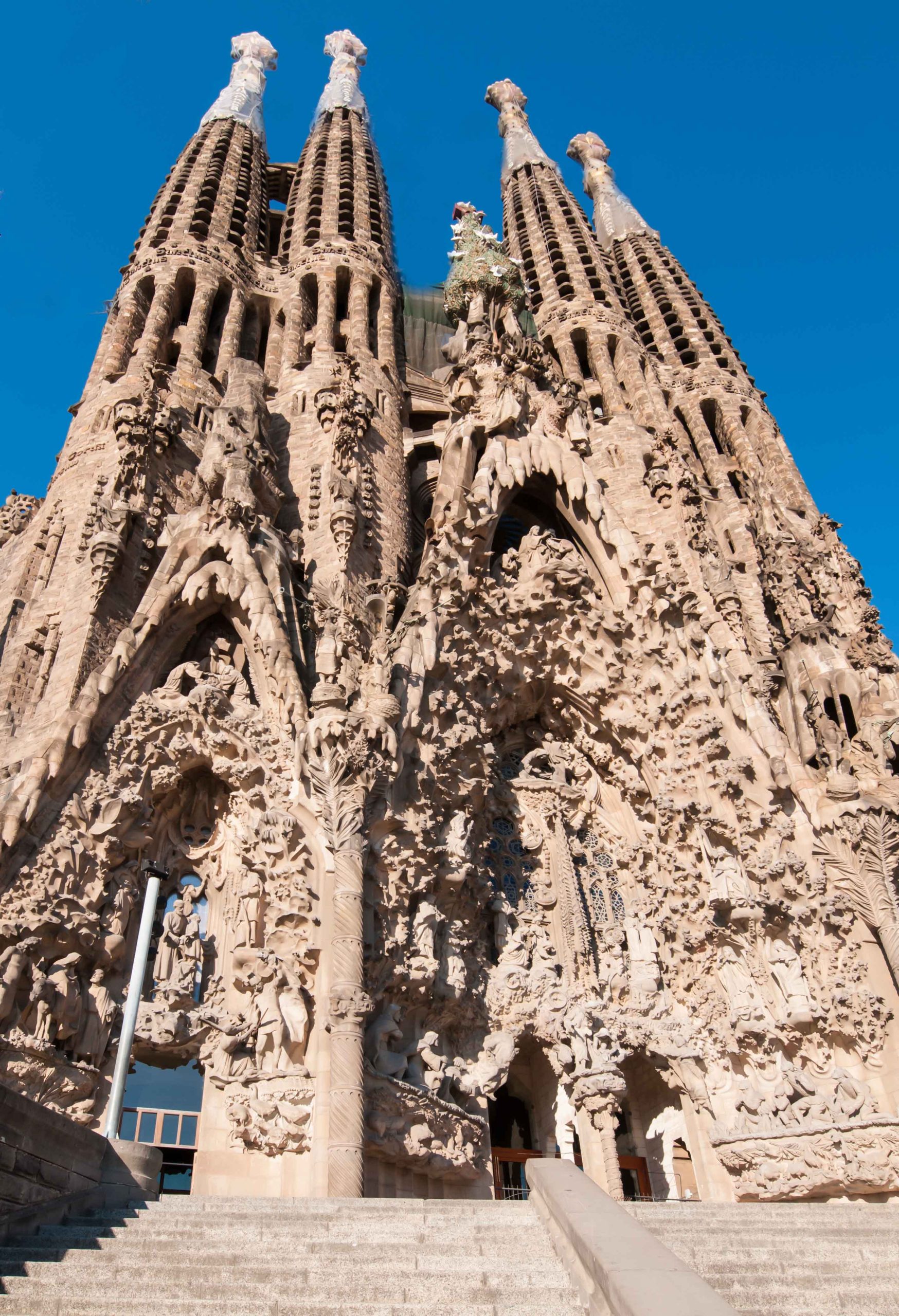
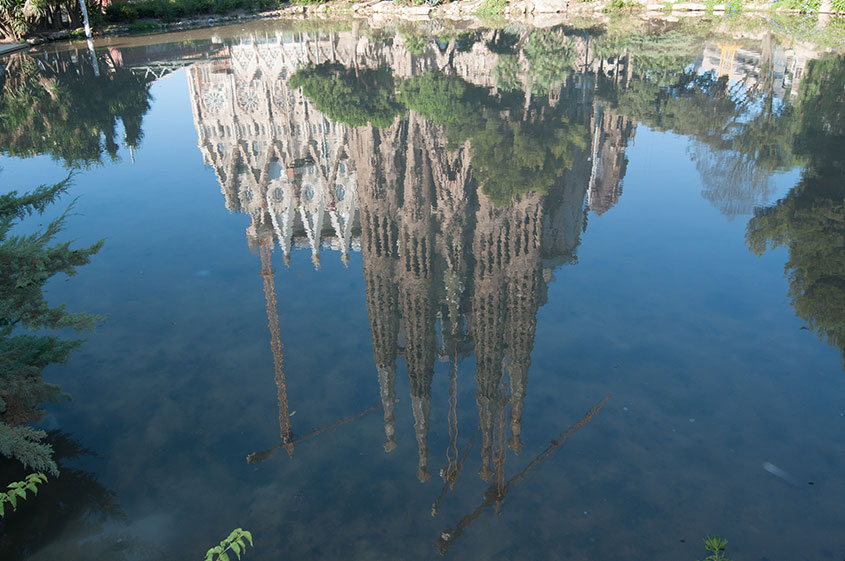
The spires of Antoni Gaudí’s Sagrada Familia church rise above the skyline like a cluster of fireworks frozen in time. Brilliant in color, fantastic in form, the “Sacred Family” church is the signature shape of Barcelona’s skyline.
Still under construction with an unknown completion date, it is a “must see” during any visit to Barcelona.
Ever changing, it grows year after year as construction continues. So if you have seen it before, its worth another visit to see how it has changed.

Antoni Gaudí's Sagrada Familia: History
March 19, 1882 was a good day for the future of Barcelona. On this day, construction began on Sagrada Familia under the supervision of local church architect Francisco de Paula del Villar.
Villar and his workers broke ground in the middle of Barcelona, which was, at that time, nothing more than empty fields, a few roads and the occasional meandering group of cattle.
One year later, the church commissioned Antoni Gaudí to lead the project. Gaudí’s philosophy that art is derived from nature came bursting out in the lowest points, highest points and nearly everything in between in the church.
The massive scale of the church demanded all of Gaudí’s attention. By the middle of the 1910’s, the architect worked almost exclusively on Sagrada Familia. Tragically, he died in 1926 when he was hit by a tram while crossing the street.
Though Gaudí passed on, his drawn-up plans and plaster models remained. The team of builders and architects with whom he worked carried on the visionary architect’s spirit.
The Spanish Civil War brought with it the furor of rebels, who stormed the church, burned the church’s schools and it’s workshop. Gaudí’s plans and plaster models were, for the most part, destroyed.
Gaudí’s colleagues were able, from memory, to reconstruct his some of his plaster models. Construction continued through the 20th century, with a team of architects working to express their own personal style in accordance with Gaudí’s vision for the building.
Barcelona officials believe that the church will be completed before 2050. With the goal set for 2026, the 100 year anniversary of Gaudi’s death.
Antoni Gaudí's Sagrada Familia: Highlights
Nearly every top-10 list of things to do in Barcelona includes Antoni Gaudí’s Sagrada Familia church. In fact, the attraction is often cited as the number-one attraction the city.
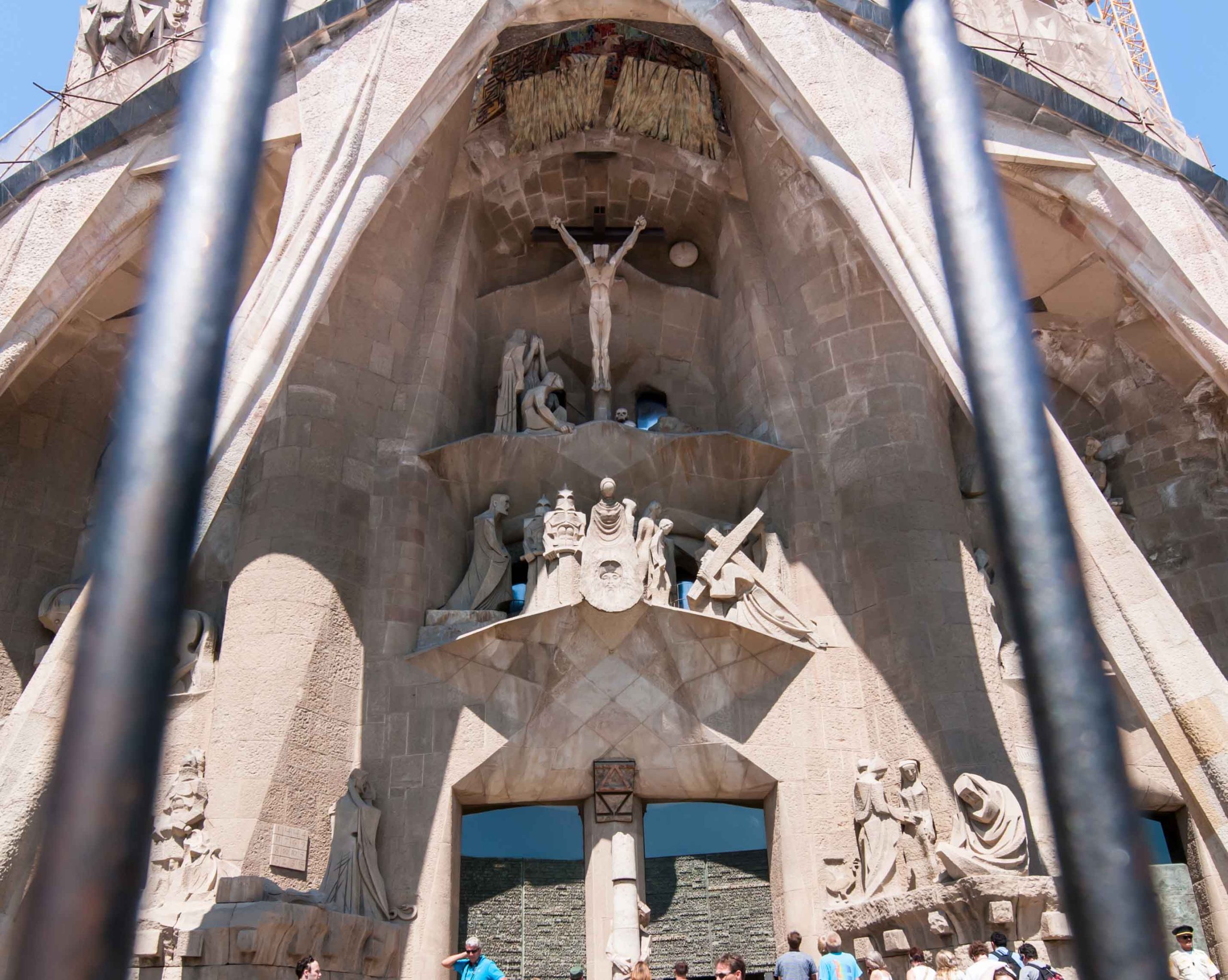
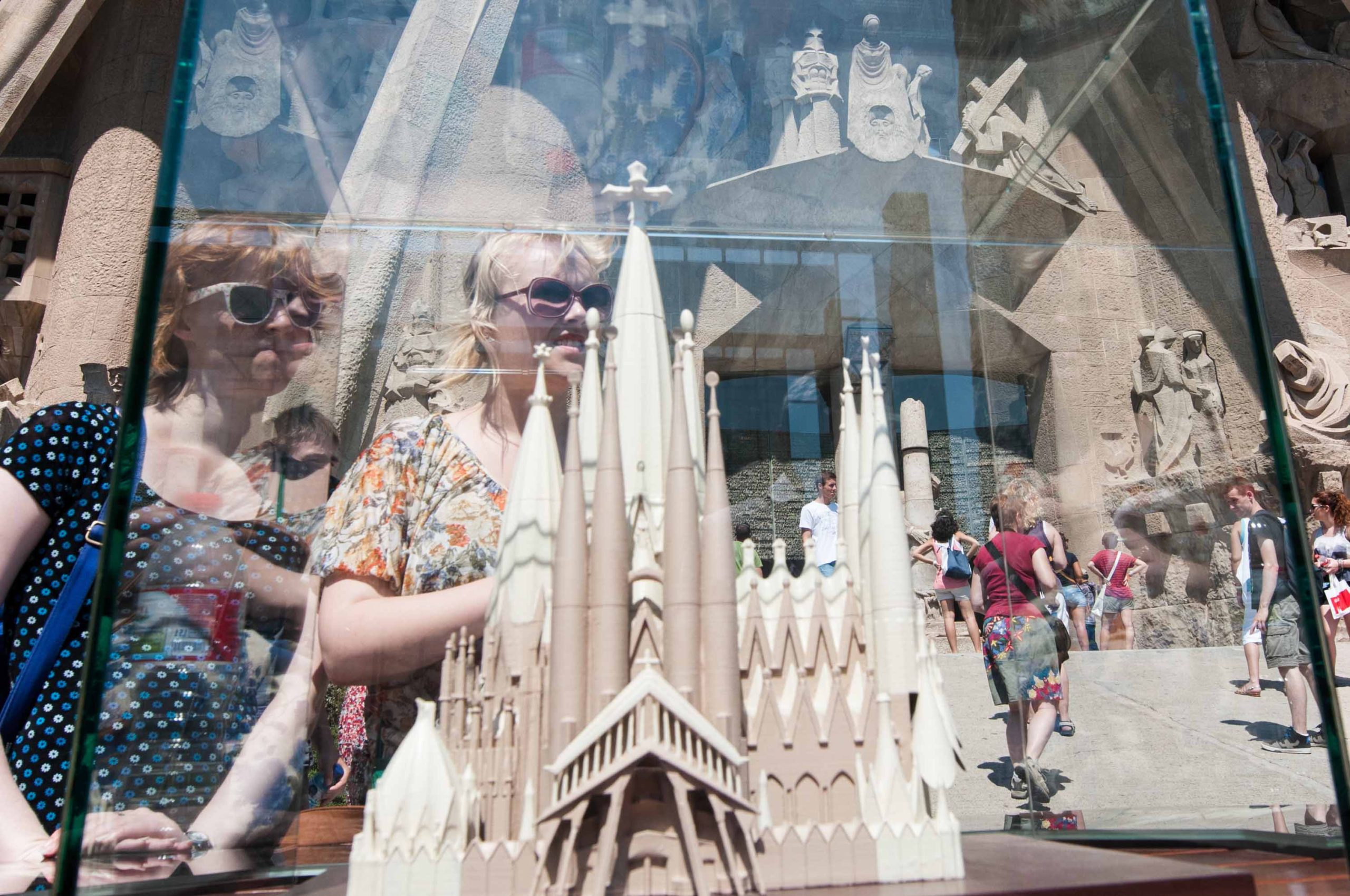
The Sagrada Familia has three façades: Nativity, the Passion, and the Glory.
Each façade communicates aspects of biblical history from Jesus to his disciples to saints that came in the decades following the death of the disciples.
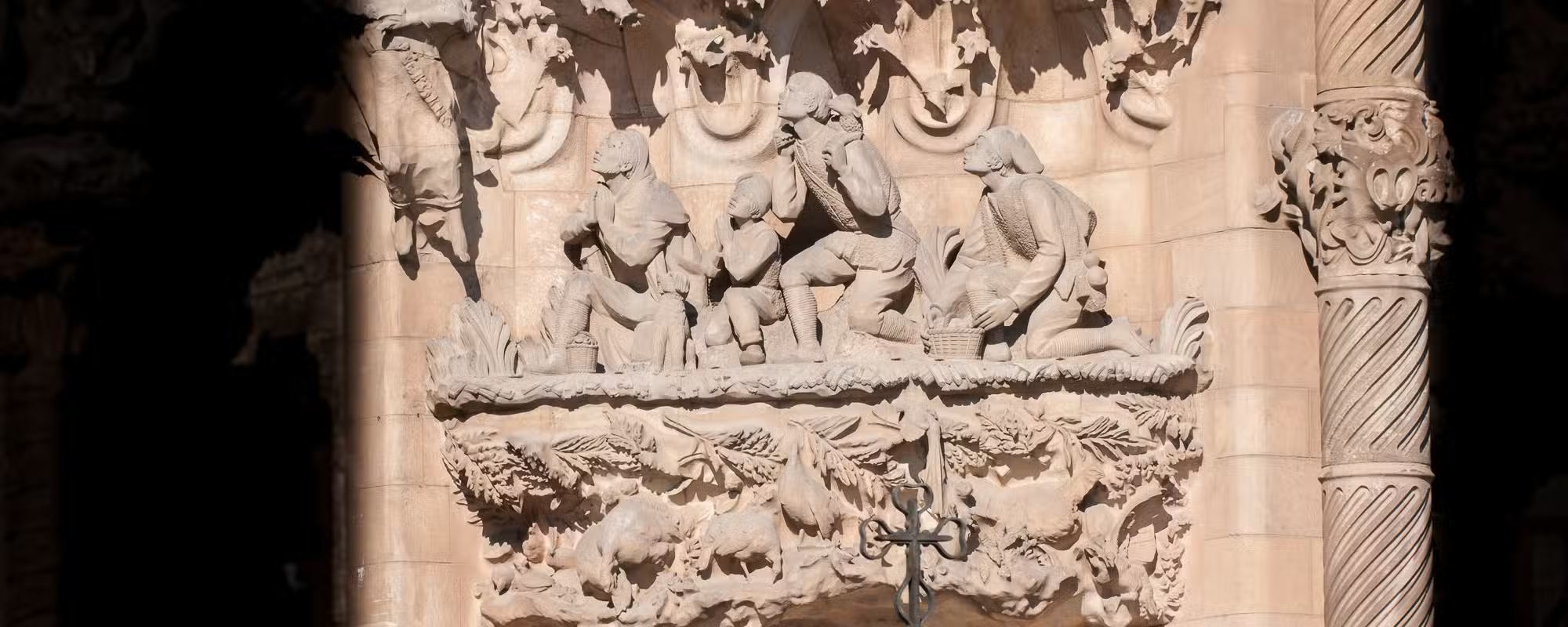
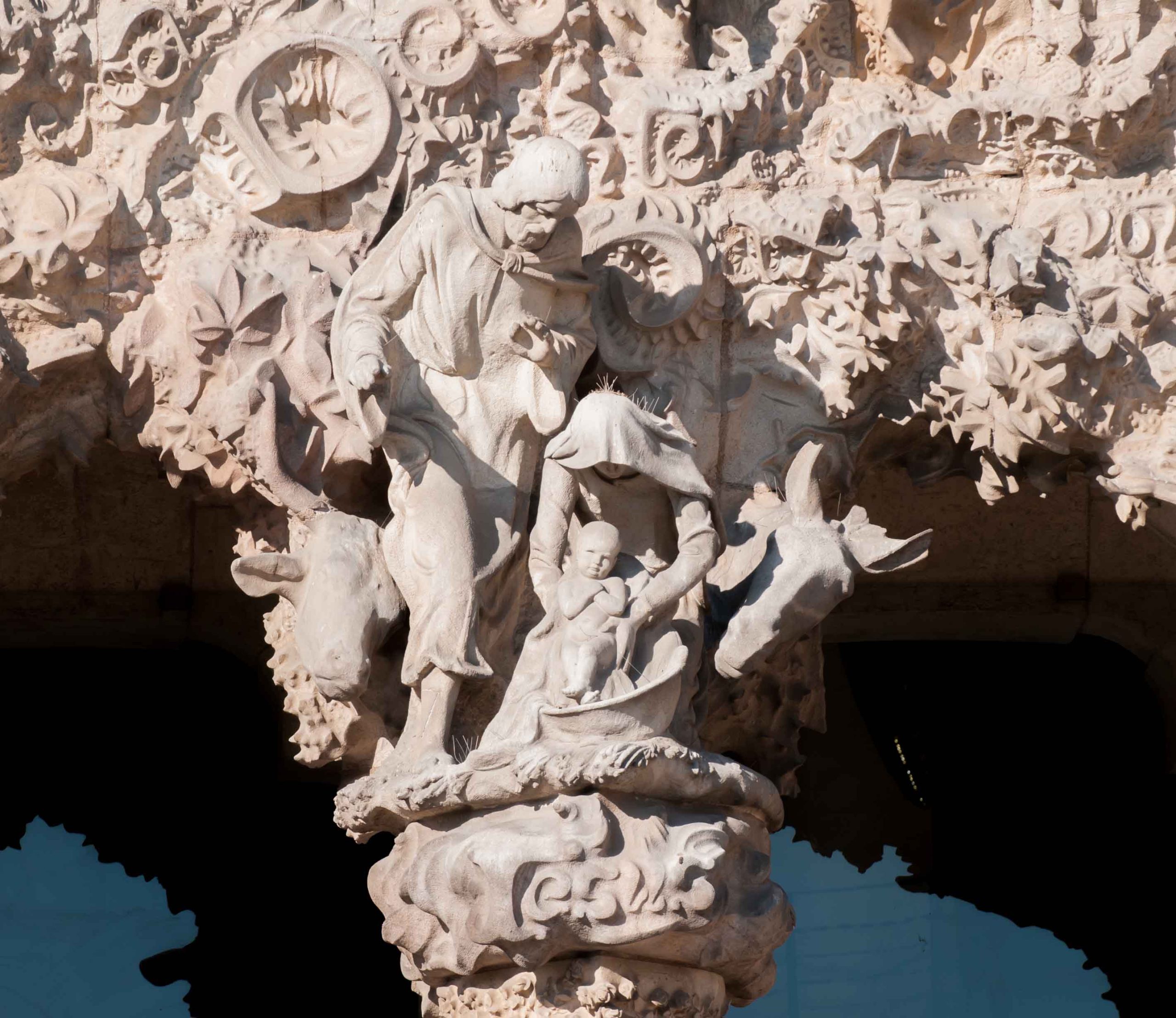
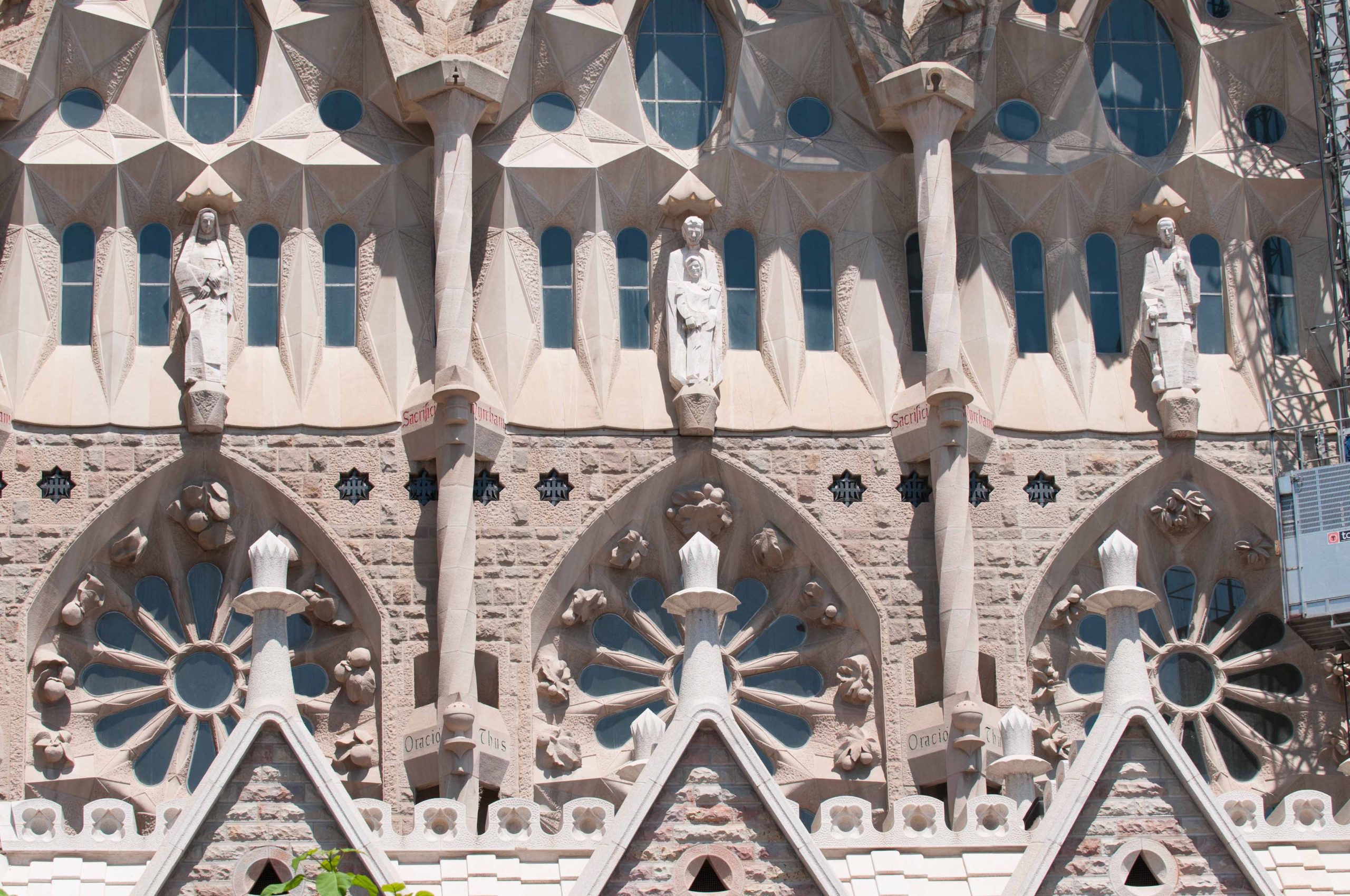
Intricate details abound on the exterior of the church, from the facial expressions of men and women to the scales and stares of animals. Each person, flora and fauna acts as a visual commentary of a biblical story.
Gaudí used stone from six different locations in Spain to construct the church. Montjuic stone, gathered from Barcelona’s own hill named Montjuic, dominates the columns of the Passion facade and the crib featured in the Nativity façade.
The supply of Montjuic stone was limited, however. These days, the church’s architects acquire Montjuic stone from building demolitions, donations and other sources.
The grey and taupe tones of stone serve as a somber backdrop for the vibrant colors bursting from the church.
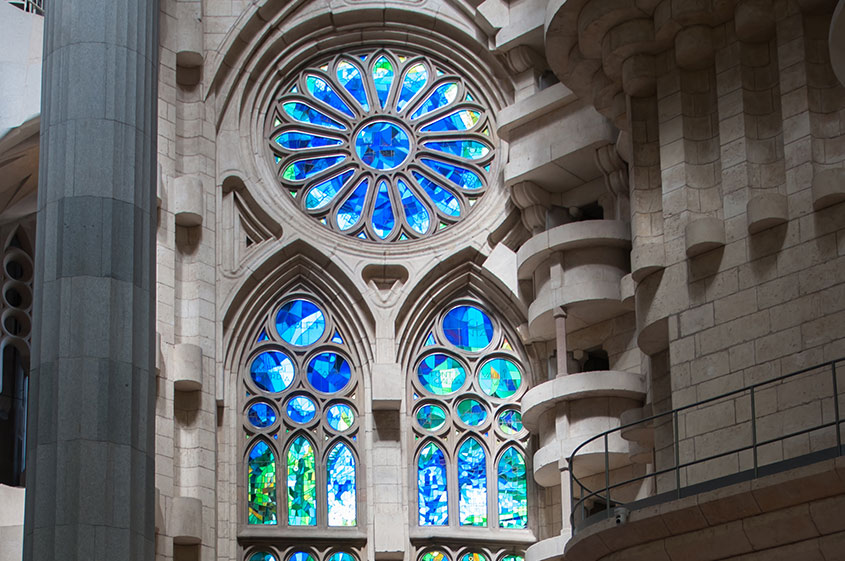
A daytime visit inside Sagrada Familia is an experience in a kaleidoscope of hues — stained glass windows transform sunlight into fascinating rainbows of color that splash against stone ceilings, pillars and walls.
Interesting Facts About Antoni Gaudí's Sagrada Familia
- Sagrada Familia is Barcelona’s top tourist attraction. More than three million people visited the magnificent building last year.
- The Sagrada Familia is an expiatory church, meaning funding for the building project has been and continues to be funded solely by donations such as your entrance fee.
- The Passion Façade, which depicts the death of Christ, purposely faces west so that the setting sun casts somber shadows over the features of the façade.
- The Nativity façade depicts the early years of Jesus’ life: his birth and his adolescent years. It was also the one that Gaudi worked on throughout his life.
- The south-facing Glory Façade receives more sunlight than all other sides. This is the main entrance to the church. Gaudi wanted this to show the struggle of humanity to reach eternal life and each person’s journey in obtaining it.
- The floor plan of the temple is roughly the size of a professional soccer field (120 meters long by 80 meters wide).
- The highest tower of the church, which represents Jesus, will reach approximately 575 feet.
Antoni Gaudí's Sagrada Familia in Images
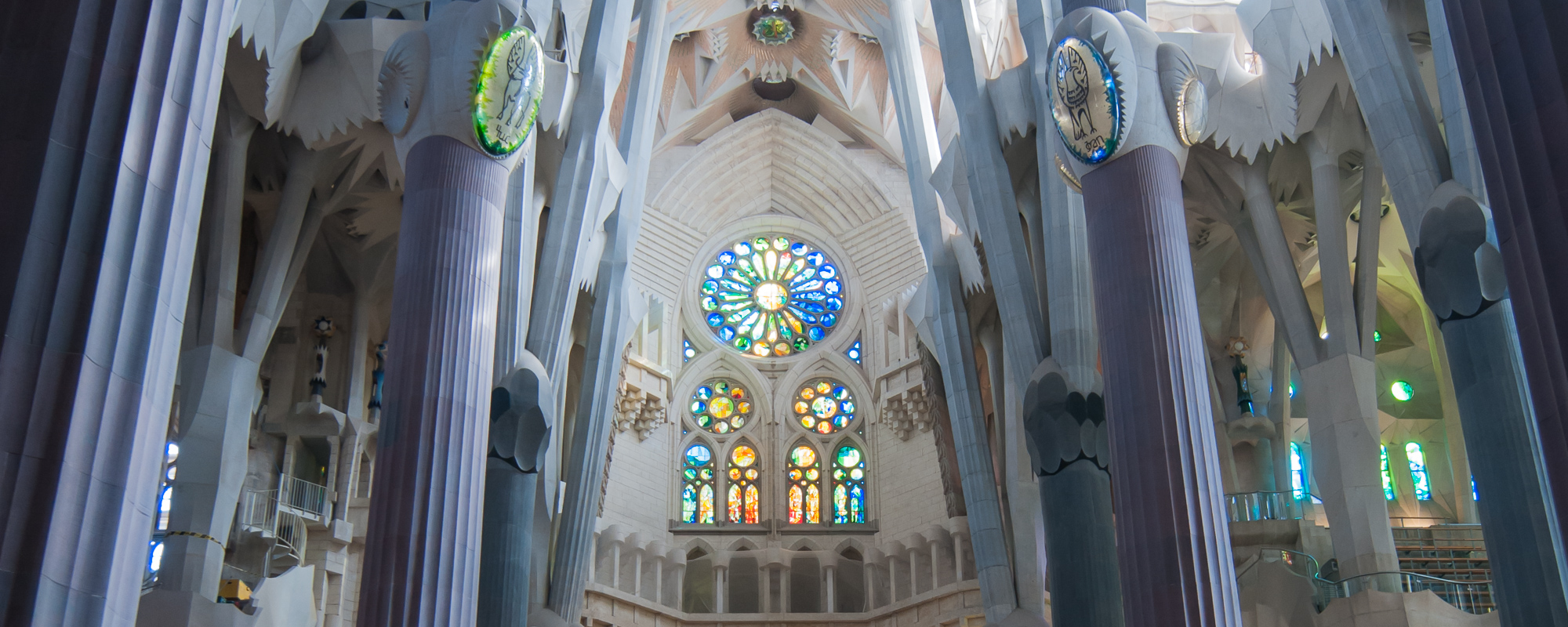
Antoni Gaudí's Sagrada Familia Hours & Contact Information
Opening Times for the Sagrada Familia basilica:
| Date | Opening Times |
| October to March | Open daily from 9 a.m. to 6 p.m. |
| April to September | Open daily from 9 a.m. to 8 p.m. |
| December 25- 26 | Open from 9 a.m. to 2 p.m |
| January 1-6 | Open from 9 a.m. to 2 p.m |
| Please Note: | Last tickets sold 15 minutes before the church closes. |
Running Times for Tower Elevators:
| Tower | Running Times |
| Passion Tower | Runs from 9 a.m. to 30 minutes before the church closes. |
| Nativity Tower | Runs from 9 a.m. to 15 minutes before the church closes |
Location & Contact Information:
- Sagrada Familia address: Carrer de Mallorca, 401, 08013 Barcelona
- Sagrada Familia telephone number: +34 935 132 060
- How to get to Sagrada Familia: Both the blue and the purple metro lines stop at Sagrada Familia.
discover Barcelona Attractions & buildings:
- The Sagrada Familia never dissapoints.
The king of Barcelona’s tourist attractions, and one of the most unique and recognizable churches in the world.
- Casa Mila, better know as the Pedrera.
Also known as Casa Mila, it’s one of the few projects Gaudi saw to completion. A visit to the roof offers great views of the city and the Sagrada Familia.
- Casa Batlo
Few structures in Barcelona match the luxury and symbolism of this apartment building reformed by Antoni Gaudi.
- The cities mosst famous food market, the Boqueria.
Colors, smells and culinary dreams come alive at this open market located just off Las Ramblas’
- Rock formations that hide a monastery within.
The holy heights of this mountain, home to a nearly 1000-year-old monastery, have long been a haven for priests, protesters and mystics.
- The Santa Maria del Mar, a gothic church.
Tucked away amid apartment buildings and narrow streets, this gothic church is a hidden gem and a shining example of Catalan gothic architecture.
- The Hospital de Sant Pau
The Hospital Sant Pau is one of the most important, and lesser known, examples of Catalán Modernism architecture.
- This medieval castle is a short drive from Barcelona.
Montesquiu castle, a 13th-century medieval structure, holds stories of ages past.