

Antoni Gaudí’s Casa Batlló: The Building That Tells a Story
From its undulating roof to its magical façade, Casa Batlló is a creative commentary from the mind of famed Catalán architect Antoni Gaudí.

Gaudí’s Casa Batlló History
Were you to stand along Passeig de Gracia in 1902, you’d notice something strange in the space where Gaudí’s Casa Batlló now stands – a boring apartment building heavy on right-angles and light on creativity.
That changed in 1903, when Josep Batlló bought the building and commissioned Gaudí to renovate it with a level of flair that would set the home apart from every other residence in the neighborhood.
Gaudí did just that, implementing his unique style in nearly every facet of the home. He renovated the home over the course of two years, completing his work in 1906.
The building changed ownership several times over the following decades, from private owners to an insurance company to its current owners.
In the 60’s, both Catalonia and Spain designated Casa Batlló a national cultural asset.
Renovations of different part s of the home took place in the 80’s, 90’s and 00’s. In 2005, UNESCO designated Casa Batlló a World Heritage Site.
Casa Batlló Highlights
Splashed with bright colors and unique features, Casa Batlló is a building that tells a story. The specific details of that story are not settled, as many experts and amateurs take away different ideas from the building’s outer features.
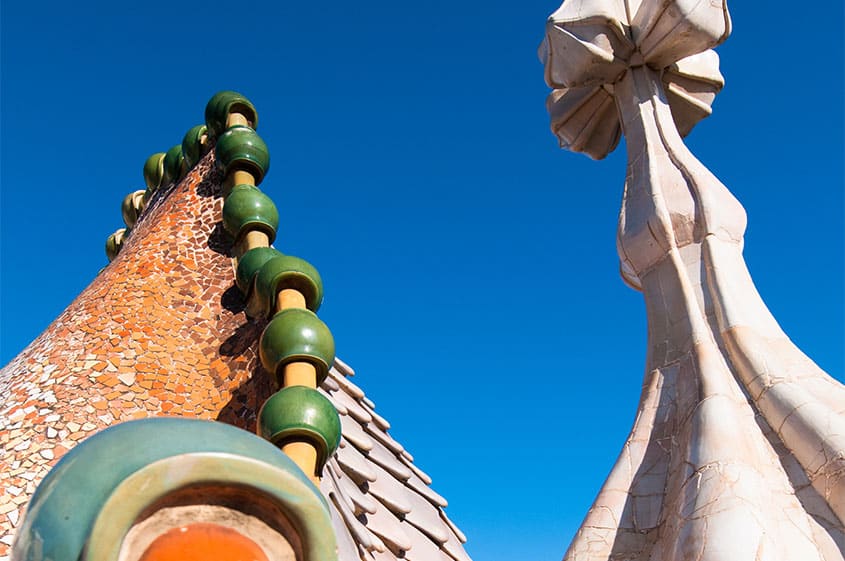
For some, the building represents the story of Sant Jordi, the patron saint of Catalonia. Legend has it that Saint Jordi slew a dragon, and that Gaudí designed the scale-laden roof to resemble a dragon, and that the bones that highlight the building’s balconies are the remnants of the dead dragon.
Others say the mosaic-laden façade represents a carnival, in which certain balconies portray festive masks and the proliferation of bright tiles represents confetti.
Still others are reminded of Monet’s impressionistic paintings as they gaze at Casa Batlló.
No matter what you believe about the structure’s design, all can agree that Gaudí’s unmatched creativity blankets the building.
The inside of Casa Batlló centers on innovate lighting and ventilation systems, as well as architectural elements that remind visitors of life beneath the surface of the ocean.
All of these factors make Casa Batlló a top-10 Barcelona tourist attraction.
Interesting Facts About Casa Batlló
- Gaudí-designed floor tiles that were never used in the house now pave the sidewalk along Passeig de Gracia.
- The house is owned by the same family that owns the Chupa Chups candy company.
- The entrance fee for Casa Batlló is the most expensive among Barcelona’s network of museums and buildings.
- After seeing Casa Batlló, a wealthy Barcelona businessman commissioned Gaudí to create a similar-looking building that eventually would be known as Casa Mila, nicknamed “La Pedrera”.
- Gaudi added 1,200 m2 to Casa Battló, expanding its size from 3,100 m2 to 4,300 m2.
- The ground floor staircase’s woodwork resembles the vertebrae of an animal.
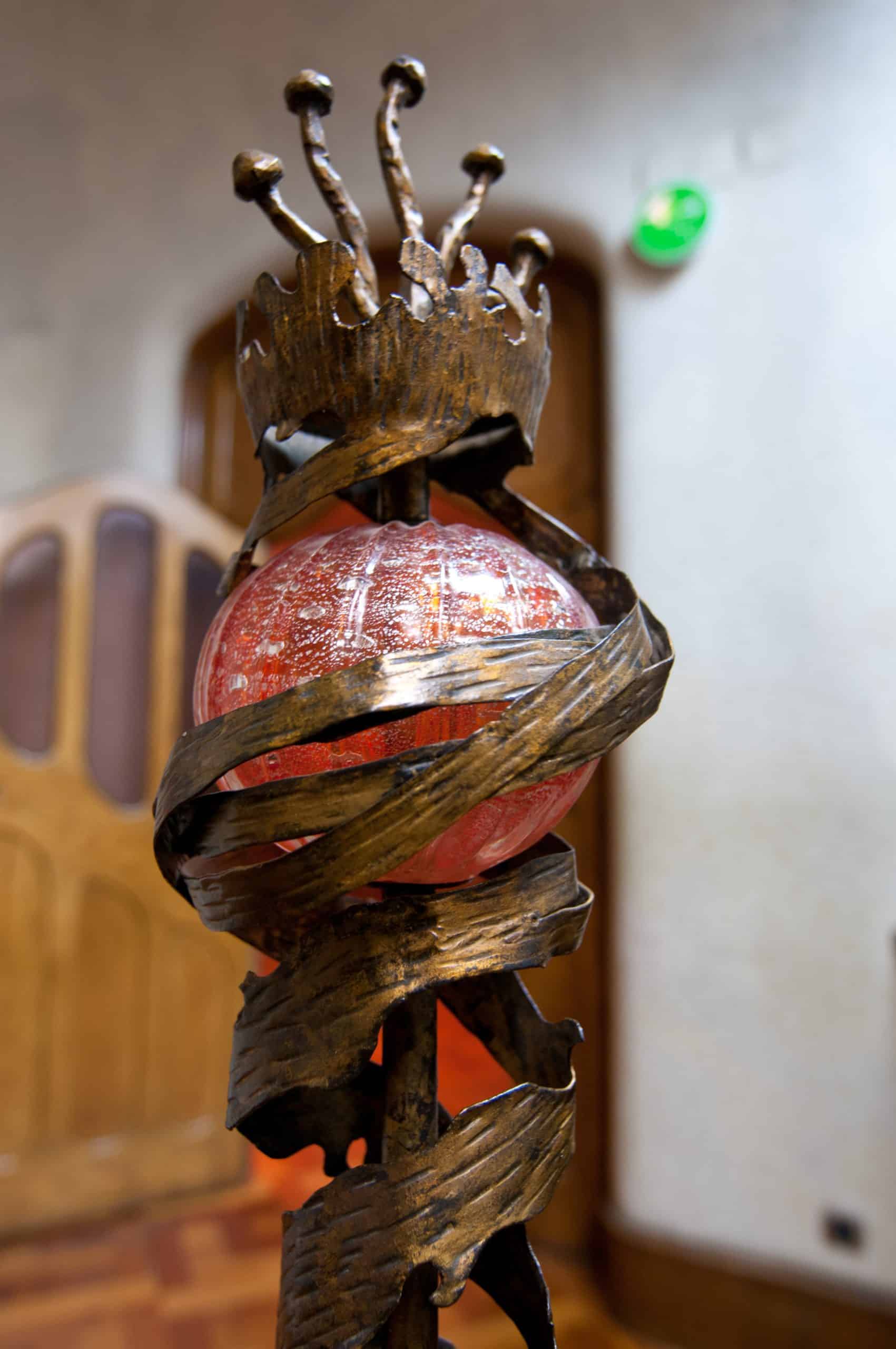
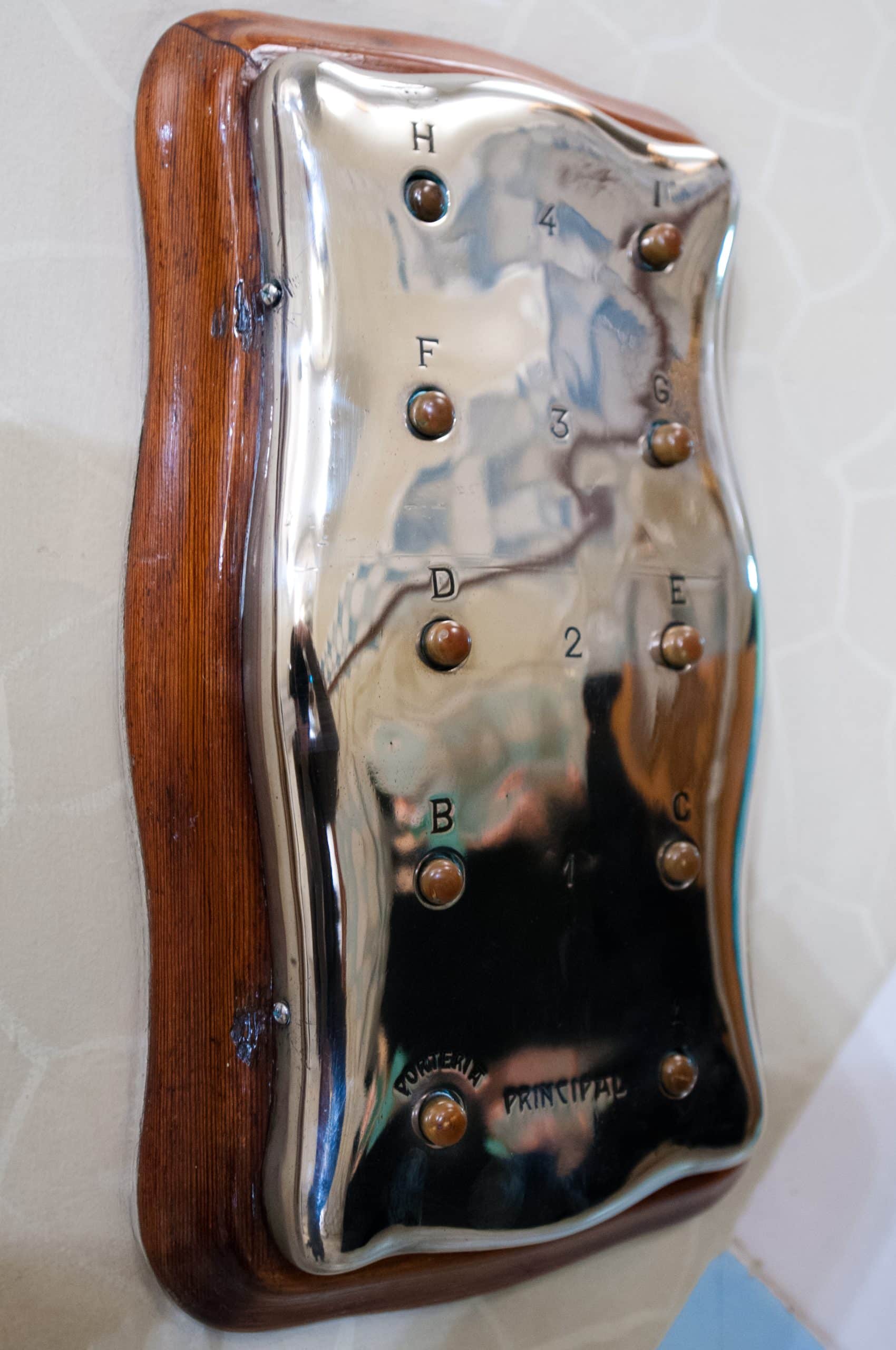
Gaudí’s Casa Batlló in Images


Casa Batlló Hours & Contact Information
Opening Hours for Casa Batlló:
| Date | Opening Times |
| Yea-Roundr | Open daily from 9 a.m. to 9:00 p.m. |
| Please Note: | Last admission at 8 p.m., one hour before closing. |
Location & contact information:
- Casa Batlló address: Passeig de Gràcia, 43, 08007 Barcelona
- Casa Batlló telephone number: +34 932 160 306
- How to get to Casa Batlló: Both the green and the purple metro lines will take you to the “Passeig de Gracia” stop. From there is is a 3-5 minute walk.
discover Barcelona Attractions & buildings:
- The Sagrada Familia never dissapoints.
The king of Barcelona’s tourist attractions, and one of the most unique and recognizable churches in the world.
- Casa Mila, better know as the Pedrera.
Also known as Casa Mila, it’s one of the few projects Gaudi saw to completion. A visit to the roof offers great views of the city and the Sagrada Familia.
- Casa Batlo
Few structures in Barcelona match the luxury and symbolism of this apartment building reformed by Antoni Gaudi.
- The cities mosst famous food market, the Boqueria.
Colors, smells and culinary dreams come alive at this open market located just off Las Ramblas’
- Rock formations that hide a monastery within.
The holy heights of this mountain, home to a nearly 1000-year-old monastery, have long been a haven for priests, protesters and mystics.
- The Santa Maria del Mar, a gothic church.
Tucked away amid apartment buildings and narrow streets, this gothic church is a hidden gem and a shining example of Catalan gothic architecture.
- The Hospital de Sant Pau
The Hospital Sant Pau is one of the most important, and lesser known, examples of Catalán Modernism architecture.
- This medieval castle is a short drive from Barcelona.
Montesquiu castle, a 13th-century medieval structure, holds stories of ages past.